

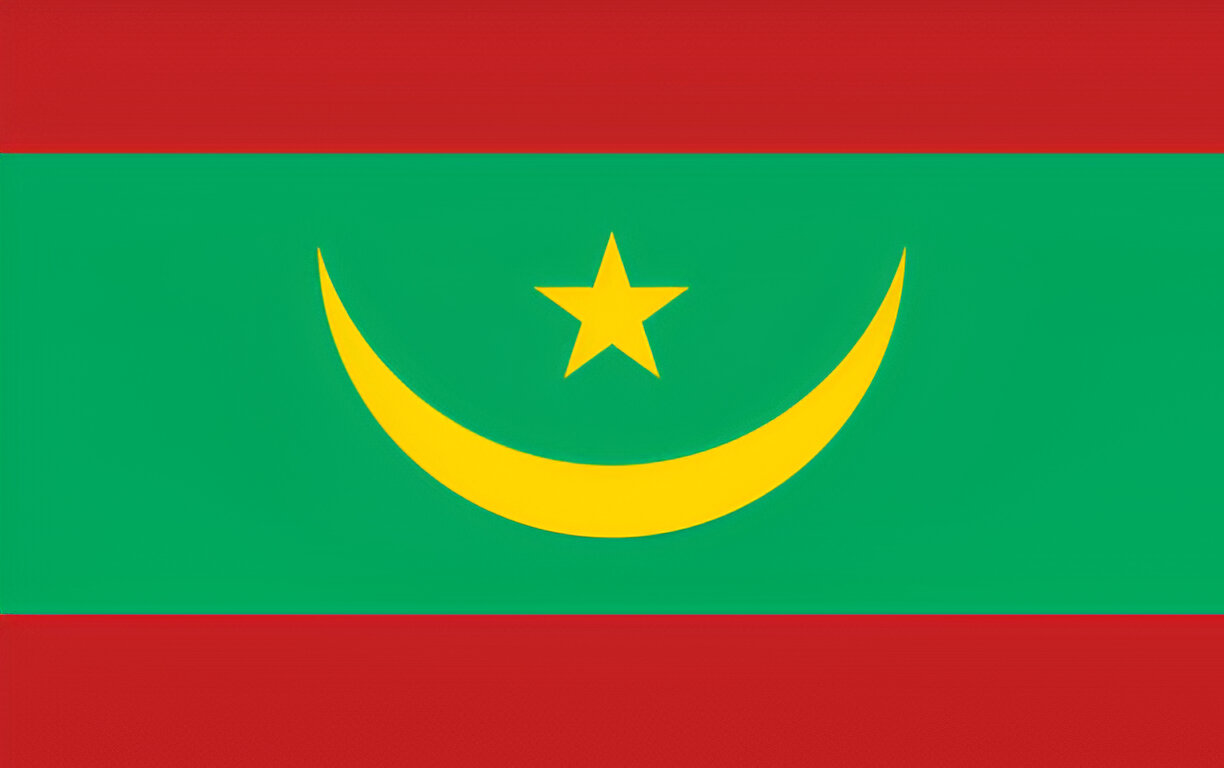
Navigating the complex labour laws governing employment practices is essential when running payroll in Mauritania. However, building an in-house compliance team may not be the most efficient way to manage your remote team’s payroll in Mauritania.
Regardless of size, global companies need help to secure in-country expertise for localised payroll services. This is where a partner like Workforce Africa provides significant value in supporting global firms to maintain compliance when handling payroll in Mauritania, addressing every intricate detail, including;
- salary computation requirements,
- taxation legislation specifics (social security, employee income tax, corporate tax, VAT, and other employee deductions).
- benefits administration, and more (health insurance, pension, paid leaves, holiday compensation
Workforce Africa simplifies hiring and payroll compliance for offshore talent management in Mauritania. No need for a subsidiary or entity setup. From contracts and onboarding to taxes, payroll, and admin tasks, partnering with us – a payroll firm in Mauritania will help you focus on growth for greater levels of success.
A. Employment Contract Termination
IIn Mauritania, employment may be lawfully terminated on recognised grounds including expiry of a fixed-term contract, resignation by the employee, dismissal for misconduct or poor performance, and retrenchment due to economic reasons.
Notice periods are stated as follows:
- Hourly or daily workers: 8 days
- Monthly-paid employees: 1 month
- Senior or executive staff: 3 months
Severance pay:
Severance pay is due unless dismissal is for gross misconduct and is calculated based on the average monthly salary over the last 12 months.
- 3 to 5 years of service: ½ month’s salary
- 5 to 10 years of service: 1 month’s salary
- 10 to 15 years of service: 2 months’ salary
- 15 to 20 years of service: 3 months’ salary
- Over 20 years of service: 4 months’ salary
Probationary period: The probationary period may be up to 3 months for regular employees and up to 6 months for managerial or technical roles. During probation, either party may terminate the contract without severance, provided due notice is given, usually 8 to 15 days.
Termination process requirements: Termination must be in writing and must clearly justify the cause. The employer must issue a termination certificate. Employees may contest dismissal through labour inspection or labour courts. For redundancies affecting multiple workers, prior government approval may be required.
B. Country Overview
The Islamic Republic of Mauritania is a Northwest African nation located along the Atlantic coast, spanning the Sahara and Sahel regions and bordered by Western Sahara, Algeria, Mali, and Senegal. Predominantly Arabic-speaking, especially through Hassaniya Arabic, it also has Pulaar, Soninke, and Wolof as widely used national languages, with French commonly used in administration and business. Mauritania has a population of about 5.2–5.3 million people. The capital, Nouakchott, is the political, administrative, and largest urban center, while Nouadhibou serves as the country’s main port and a major commercial and fishing hub.
Mauritania’s economy is heavily driven by extractive industries, particularly iron ore, gold, copper, and increasingly natural gas, alongside a major fisheries sector. Key economic activities also include livestock, agriculture along the Senegal River valley, port services, construction, telecommunications, trade, and transport. Nouadhibou plays a central role in the economy through fishing, shipping, logistics, and mineral export activity, while Nouakchott supports government, finance, commerce, and service-sector activity. The government has sought to diversify the economy beyond mining and other extractive sectors by encouraging agriculture, services, digital development, infrastructure, and regional trade, though growth remains vulnerable to commodity price fluctuations, climate pressures, and limited economic diversification.
Although Mauritania has a growing and capable workforce, hiring and establishing a team can still be time-consuming and administratively demanding for foreign employers navigating local employment requirements and compliance obligations. However, partnering with an Employer of Record (EOR) or Professional Employer Organisation (PEO) in Mauritania can support faster market entry and help manage the legal, payroll, and administrative complexities of operating in the country.
C. Payroll Processing in Mauritania
Local labour laws in Mauritania govern payroll processing, with each employee’s salary potentially calculated differently. Due to compliance concerns, processing payroll at scale can become complex, cumbersome, and risky. Here are the phases of payroll processes global businesses should understand-:
- Pre-payroll Phase: Set clear policies and compliant processes (entity and employee set-up, work-location rules, leave and working-time alignment with Mauritanian standards) while collaborating with compliance partners.
- Payroll Calculation Phase: Collect and validate inputs to compute base pay, allowances, overtime, and statutory deductions accurately, using secure systems and digital workflows to reduce error.
- Post-payroll Phase: Disburse net pay, remit PAYE and social contributions on time, file required returns, administer benefits, and reconcile records to minimise penalties and support audits.
D. Payroll Components in Mauritania
Here are some aspects comprehensively needed to navigate Mauritania’s payroll compliance:
- Salary / Wages
- Overtime premiums
- Social-security contributions
- Health-insurance cover
- Payroll taxes (corporate & personal)
- Paid leave & public holidays
- Other statutory benefits
E. Navigating Mauritania Payroll Compliance
Employment and payroll compliance in Mauritania requires alignment with contract standards, statutory deductions, working-time rules, leave entitlements, and lawful termination procedures.
Salary/ Minimum Wage: The national minimum wage is 30,000 MRU per month.
Working hours and overtime:
- Standard workweek: 40 hours per week.
- Rest period: employees are entitled to at least 24 consecutive hours of rest per week.
- Overtime: compensated at higher rates as determined by collective agreements or ministerial orders.
Health Insurance:
Mauritania does not operate a universal healthcare system. Healthcare coverage is primarily supported through contributions to the National Social Security Fund (CNSS), while many employers also provide private health insurance due to the limited public health system.
Social Security Contributions:
Mandatory contributions are distributed between the Caisse Nationale de Sécurité Sociale (CNSS) and the Caisse Nationale d’Assurance Maladie (CNAM).
Employer contributions:
- CNSS: 3% of the employee’s monthly salary for social security and 2% for medical coverage.
- CNAM: 5% of the employee’s monthly salary for health insurance.
Employee contributions:
- CNSS: 1% of the monthly salary.
- CNAM: 4% of the monthly salary.
Pension Benefits:
Pension benefits are funded through mandatory contributions from employers and employees under the national social security framework. Female employees may qualify for old-age pension from the age of 55, while male employees may qualify from the age of 60.
Personal Income Tax (PIT): Mauritania imposes a progressive income tax on individuals with the following brackets:
- 15% on income from MRU 0 to MRU 9,000
- 25% on income from MRU 9,001 to MRU 21,000
- 40% on income exceeding MRU 21,000
Employees may also be subject to social security contributions and a housing tax of 3%.
Corporate Income Tax (CIT): Companies are taxed at 25% on net taxable profits. Alternatively, if this produces a lower amount, a minimum tax of 2% on taxable revenue applies, whichever is greater. Certain small and medium-sized enterprises and agricultural entities may benefit from reduced rates or exemptions, subject to eligibility.
Value Added Tax (VAT): A standard VAT rate of 16% is levied on most goods and services.
Other laws of relevance (selection):
- Contract types include permanent or indefinite-term contracts, fixed-term contracts, apprenticeship or training contracts, and temporary work contracts.
- Fixed-term contracts must not exceed two years and may be renewed once.
- All employment contracts must be in writing when exceeding 3 months or where required by law.
- Essential clauses include identity of parties, job title and responsibilities, remuneration and benefits, working hours, probation period, and termination terms.
Payroll Taxes:
| Taxes | Employer | Employee | Details |
|---|---|---|---|
| CNSS | 3% social security + 2% medical coverage | 1% | Statutory contribution to the Caisse Nationale de Sécurité Sociale. |
| CNAM | 5% | 4% | Statutory health insurance contribution to the Caisse Nationale d’Assurance Maladie. |
| Housing tax | 0% | 3% | Employee-side housing tax may apply in addition to income tax and social security contributions. |
| Income Tax (PIT) | 0% | Variable | Progressive personal income tax with rates of 15%, 25%, and 40% based on MRU income bands. |
| VAT | N/A (transaction tax) | N/A (transaction tax) | Standard VAT rate is 16%. |
| Corporate Income Tax | N/A (entity level) | N/A | 25% on net taxable profits, or 2% minimum tax on taxable revenue where greater. |
Paid Leaves:
- Annual Leave: Employees who have completed at least 12 months of continuous service are entitled to paid annual leave. Employees aged over 18 receive 1.5 days per month, employees under 18 receive 2 days per month, and non-resident employees receive 3 days per month. Additional leave applies by length of service: 1 extra day for more than 10 but less than 15 years of service, 2 extra days for more than 15 but less than 20 years, and 3 extra days for more than 20 years of service.
- Sick Leave: Employees are eligible for sick leave. The duration and pay level are typically determined by medical certification and the terms of the employment contract.
- Maternity Leave: Female employees are entitled to 14 weeks of maternity leave.
- Paternity Leave: Paternity leave is not specifically defined under Mauritanian labour legislation and may depend on employer policy or applicable collective agreements.
- Paid Public Holidays: Employees are entitled to paid leave on public holidays recognised by the government.
Paid Public Holidays:
These are the national holidays that are celebrated in Mauritania:
- New Year’s Day: January 01
- Labour Day: May 1
- Organization of Africa Unity Day: May 25
- Eid al-Fitr: Date varies
- Eid al-Adha: Date varies
- Islamic New Year: Date varies
- Independence Day: November 28
G. Payroll Outsourcing in Mauritania
Payroll in Mauritania includes minimum wage positioning, working time and overtime management, statutory deductions through CNSS and CNAM, PIT withholding, housing tax where applicable, leave administration, and compliant termination handling, including notice and severance where applicable.
Collaborate with an Africa employer of record and payroll solutions provider such as Workforce Africa to strategically outsource your payroll operations while ensuring compliance with local labour regulations. Additionally, leverage our flexible service offerings to expand your international teams as needed.