
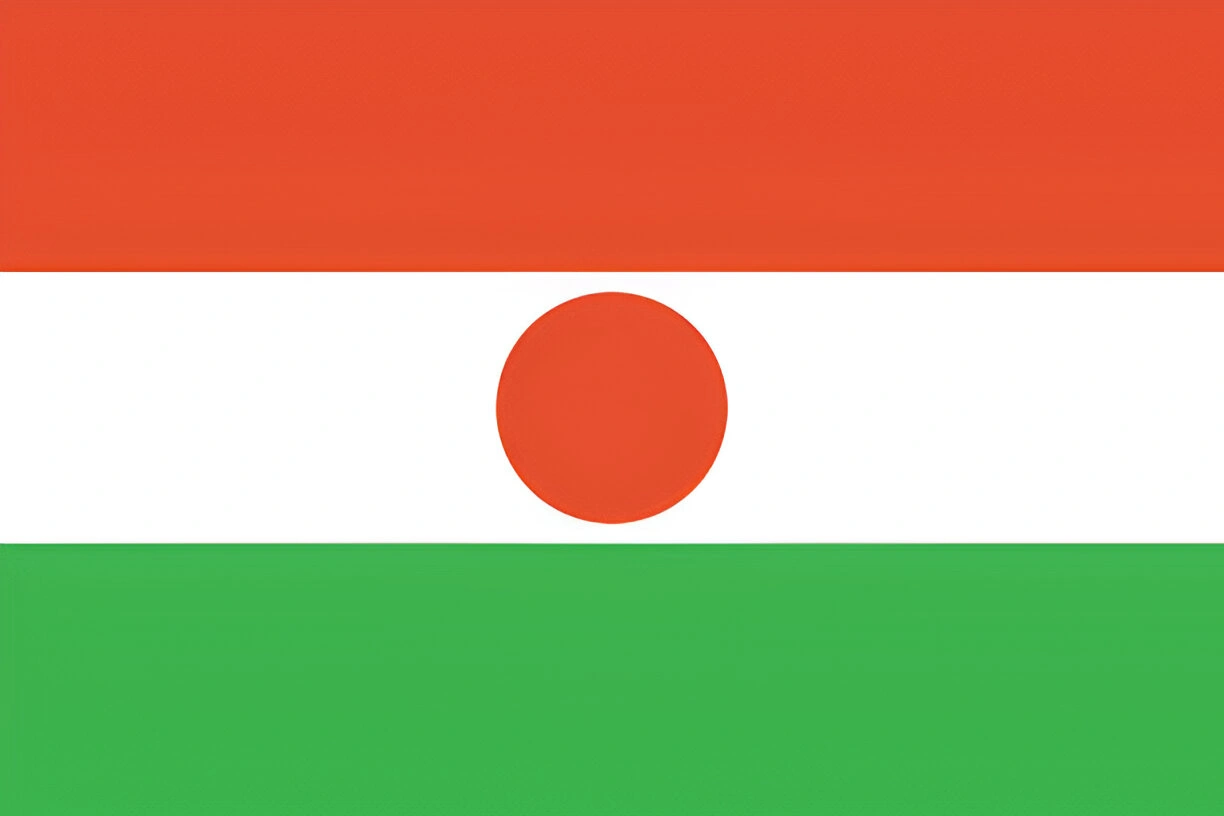
Navigating the complex labour laws governing employment practices is essential when running Niger payroll. However, building an in-house compliance team may not be the most efficient way to manage your remote team’s payroll in Niger.
Regardless of size, global companies need help to secure in-country expertise for localised payroll service. This is where a partner like Workforce Africa provides significant value in supporting global firms to maintain compliance when handling payroll in Niger, addressing every intricate detail, including;
benefits administration, and more (health insurance, pension, paid leaves, holiday compensation, salary computation requirements, taxation legislation specifics (social security, employee income tax, corporate tax, VAT and other employee deductions.
Workforce Africa simplifies hiring and payroll compliance for offshore talent management in Niger. No need for a subsidiary or entity setup. From contracts and onboarding to taxes, payroll, and admin tasks, partnering with us – a payroll firm in Niger will help you focus on growth for greater levels of success.
A. Employment Contract Termination
In Niger, an employment contract may be brought to an end in accordance with the Labour Code. Notice must be in writing and state the reason and effective date. Statutory notice periods include:
- Non-monthly (hourly/daily/weekly) workers: 8 days
- Monthly-paid workers: 1 month
- Supervisors/Technicians: 1–3 months
- Executives/Engineers & equivalent: 3 months
- Senior executives: 3 months
Payment in lieu of notice is permitted where the employer elects not to serve notice. Severance pay applies for economic/technical/structural dismissals or closure, calculated by service: 1 month (5 years), 2.5 months (10 years), 4 months + 7 days (14 years). (Not payable on resignation or dismissal for gross misconduct.)
B. Country Overview
The Republic of Niger is a land-linked West African country with its capital in Niamey. Key sectors include mining, agriculture, livestock, and services. Competitive labour costs and an OHADA/Francophone legal environment support regional market entry for international employers.
Niger’s low labour costs and abundant natural resources continue to make it an attractive destination for businesses seeking expansion opportunities in West Africa.
Although Niger possesses a highly skilled workforce, hiring and establishing a team can be time-consuming and challenging. However, partnering with an Employer of Record (EOR) or Professional Employer Organisation (PEO) in Niger facilitates swift market entry. It manages all legal complexities associated with operations in the country.
C. Payroll Processing in Niger
Local labour laws in Niger govern payroll processing, with each employee’s salary potentially calculated differently. Due to compliance concerns, processing payroll at scale can become complex, cumbersome, and risky. Here are the phases of payroll processes global businesses should understand-:
- Pre-payroll Phase: Set clear policies and compliant processes (entity and employee set-up, work-location rules, leave and working-time alignment with Niger standards) while collaborating with compliance partners.
- Payroll Calculation Phase: Collect and validate inputs to compute base pay, allowances, overtime, and statutory deductions accurately, using secure systems and digital workflows to reduce error.
- Post-payroll Phase: Disburse net pay, remit PAYE and social contributions on time, file required returns, administer benefits, and reconcile records to minimise penalties and support audits.
D. Payroll Components in Niger
Here are some aspects comprehensively needed to navigate Niger’s payroll compliance:
- Salary / Wages
- Overtime premiums
- Social-security contributions
- Health-insurance cover
- Payroll taxes (corporate & personal)
- Paid leave & public holidays
- Other statutory benefits
E. Navigating Niger Payroll Compliance
Employment in Niger is primarily governed by the Labour Code and the tax and social security legislation applicable to employers and employees.
I. Salary / Minimum Wage
The current statutory minimum wage is XOF 42,000 per month. Sectoral/collective agreements may set higher floors.
II. Working Hours and Overtime
The normal workweek is 40 hours (typically five 8-hour days). Overtime applies beyond 40 hours and is compensated at increased rates: 125% for hours 41–48, 135% beyond 48; 150% on Sundays/public holidays; 200% for night work on Sundays/public holidays.
III. Social Security Contributions
- Employee: 5.25% of gross salary (social security).
- Employer: 6.25% (pensions/social insurance) + 8.4% family allowances + 1.75% work injury insurance.
IV. Health Insurance Scheme
There is no separate nationwide mandatory payroll health insurance; some employers provide private medical insurance as a benefit.
V. Pension Arrangements
Employers must register employees with the statutory social security scheme and ensure accurate and timely contribution remittances.
VI. VAT and Corporate Income Tax:
The VAT (TVA) standard rate is 19% (with a 5% reduced rate for specified essentials). The corporate income tax (CIT) standard rate is 30%.
VII. Income Tax (PAYE)
Employment income is taxed progressively and withheld at source.
- Monthly PAYE bands (XOF):
- 0 – 25,000: 0%
- 25,001 – 50,000: 2%
- 50,001 – 100,000: 6%
- 100,001 – 150,000: 13%
- 150,001 – 300,000: 25%
- 300,001 – 400,000: 30%
- 400,001 – 700,000: 32%
- 700,001 – 1,000,000: 34%
- Above 1,000,000: 35%.
- Annual PAYE bands (XOF — computed for payroll planning):
- 0 – 300,000: 0%
- 300,001 – 600,000: 2%
- 600,001 – 1,200,000: 6%
- 1,200,001 – 1,800,000: 13%
- 1,800,001 – 3,600,000: 25%
- 3,600,001 – 4,800,000: 30%
- 4,800,001 – 8,400,000: 32%
- 8,400,001 – 12,000,000: 34%
- Above 12,000,000: 35%. (Annualised from monthly thresholds.)
VIII. Other Laws of Relevance (selection)
Probationary periods: up to 6 months for indefinite-term contracts and 1 month for fixed-term contracts; termination during probation follows reduced notice rules.
IX. Payroll Taxes Summary:
| Taxes | Details | Contributors |
| Social Contributions | Employer: 6.25% social insurance, 8.4% family allowances, 1.75% work injury. Employee: 5.25% social insurance. Calculated on covered earnings; employer withholds/remits. | Employer: 6.25% + 8.4% + 1.75% Employee: 5.25% |
| Health Insurance | No nationwide mandatory payroll health deduction; private medical cover often provided by employers. | Employer: Not a separate statutory payroll rate Employee: Not a separate statutory payroll rate |
| Income Tax (PAYE) | Employee pays income tax based on their earnings, with rates ranging from 0% – 35%. | Employer: 0% Employee: Variable |
F. Paid Leaves
- Annual leave: 30 calendar days per full year of service (2.5 calendar days per month). Additional days accrue with long service: +2 days (20 years), +4 days (25 years), +6 days (30 years).
- Sick leave: Maximum 6 months; pay depends on service length (e.g., up to the notice-period on full pay, then half pay for defined periods).
- Maternity leave: 14 weeks (6 weeks pre-natal, 8 weeks post-natal). Employer pays 50% and social security 50%; after 2 years’ service, the employer pays full salary with any social-security reimbursement deducted.
- Paternity leave: 1 day of paid leave at birth. Additional leaves (e.g., bereavement, study) may be provided by employer policy.
- Paid Public Holidays: Niger observes the following paid public holidays (Islamic dates vary by lunar calendar):
- New Year’s Day (1 January)
- Easter Monday (date varies)
- Labour Day (1 May)
- Concord Day (24 April)
- Independence Day (3 August)
- Republic Day (18 December)
- Eid al-Fitr (date varies)
- Eid al-Adha (date varies)
- The Prophet’s Birthday (date varies)
- Christmas Day (25 December).
G. Payroll Outsourcing in Niger
Payroll in Niger also encompasses probation rules, notice/severance entitlements, and multiple employer social charges. Employers should align contracts and policies with the Labour Code (e.g., probation, notice, severance, working time, leave) to avoid disputes and penalties.
Collaborate with an Africa employer of record and payroll solutions provider such as Workforce Africa to strategically outsource your payroll operations while ensuring compliance with local labour regulations. Additionally, leverage our flexible service offerings to expand your international teams as needed.