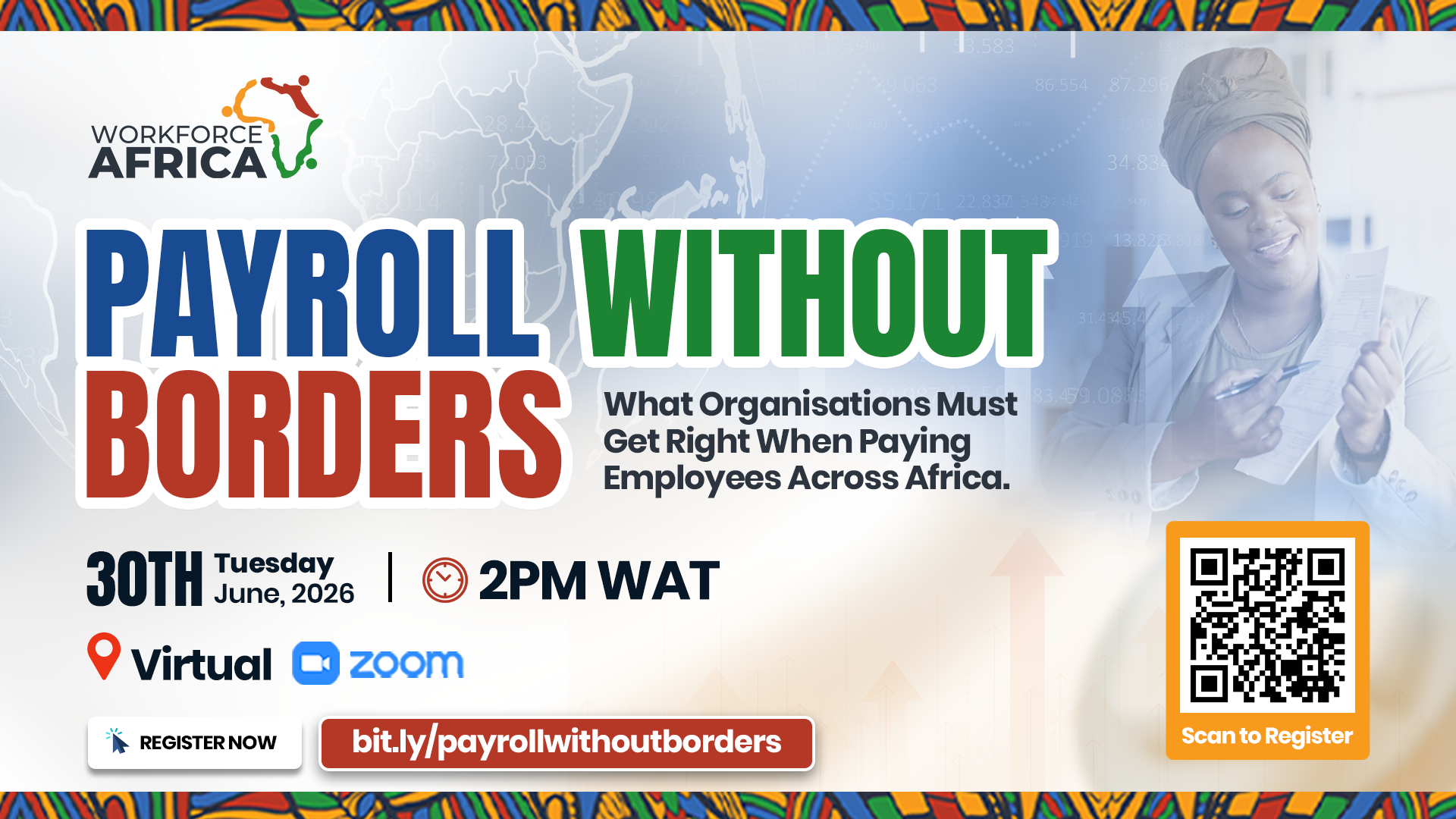
Overview
Paying employees across Africa is not as simple as running salary transfers at the end of the month. Every country sets its own rules on tax, statutory deductions, employer contributions, pensions, social security, health insurance, payroll documentation, expatriate requirements, currency treatment, and remittance deadlines.
For organisations operating in more than one market, the real question is not only whether employees are paid on time. It is whether payroll is compliant, auditable, correctly structured, locally aligned, and able to scale across different African markets.
As organisations grow across the continent, payroll often grows in pieces. A local provider in one country, an internal process in another, separate reports that never quite match. Each choice makes sense at the time. Together they create a set-up that is hard to govern and easy to get wrong.
This practical session helps HR leaders, Finance leaders, Country Managers, Global Mobility teams, and expansion leaders understand what they must get right when hiring and paying employees across Africa.
This is not theory. It is built on real operational experience across more than 45 African markets.


What You will Learn
By the end of this webinar, you will understand:
- Why multi-country payroll in Africa requires more than salary processing.
- The common payroll compliance risks organisations face across African markets.
- How tax, pension, social security, health insurance, and employer obligations differ from country to country.
- What to put in place before hiring employees in a new African country.
- How to think about payroll for local employees, expatriates, remote workers, and Employer of Record employees.
- How to build payroll governance across several African countries.
- What HR and Finance leaders should expect from a payroll partner.
- How to assess whether your current payroll model is compliant, scalable, and audit-ready.
Why This Webinar Matters
Payroll mistakes across Africa rarely announce themselves. They build up quietly and surface as penalties, audits, or lost trust.
- Payroll errors damage employee trust and trigger avoidable escalations.
- Late or incorrect statutory remittances expose organisations to penalties, audits, and reputational risk.
- Employee classification errors create tax, labour, and benefits exposure.
- Fragmented vendors across countries lead to inconsistent reporting and weak governance.
- Expatriate payroll requires alignment across payroll, immigration, tax, benefits, and local employment rules.
- Africa expansion needs local knowledge, central control, and reliable execution.
There is no single right answer. The best approach depends on where your business operates today and where it is headed next.

Who Should Attend
This session is built for leaders who carry payroll risk and cost across more than one market:

HR Directors, HR Managers, and People Operations leaders

CFOs, Finance Directors, payroll managers, and accounting teams

Country Managers and Africa expansion teams

Global Mobility, Compliance, Risk, and Legal stakeholders

NGOs, INGOs, donor-funded organisations, and development institutions

Organisations operating in one or more African countries
Organisations planning to hire employees or expatriates in Africa

About the Session
- Payroll as a strategic risk function: why payroll is compliance, control, and employee trust infrastructure.
- What makes African payroll complex: country differences in tax, social security, pension, health, filing, documentation, and currencies.
- Common mistakes organisations make: late registrations, wrong classifications, weak remittance controls, fragmented vendors, and inconsistent reports.
- A multi-country payroll compliance framework: readiness, classification, structuring, processing, remittance, reporting, reconciliation, and governance.
- Expatriate and cross-border payroll: work permits, tax residency, allowances, home and host payroll, double taxation, and local requirements.
- Choosing the right payroll partner: coverage, local expertise, service levels, proof of remittance, data security, reporting, and employee support
- Live interactive Q&A